Published on: April 7th 2025
Category: American History, Civil Rights, Women’s Suffrage
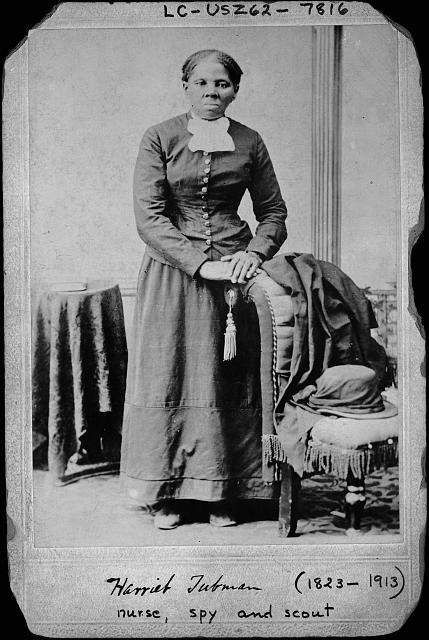
Few figures in American history embody courage, resilience, and unwavering dedication to justice like Harriet Tubman. Born into slavery, she became a legendary conductor of the Underground Railroad, a Union spy, a nurse, and a suffragist. Her life’s work transcended personal freedom she fought for the liberation of enslaved people, the rights of women, and the dignity of the oppressed.
In this blog post, we explore Harriet Tubman’s extraordinary life, her impact on American society, and the enduring legacy that continues to inspire generations plus a quiz to test your knowledge!
Early Life and Enslavement (1822–1849)
Harriet Tubman was born Araminta Ross in March 1822 in Dorchester County, Maryland, to enslaved parents Harriet “Rit” Green and Benjamin Ross. As a child, she endured brutal treatment hired out as a nursemaid at age six, she was whipped for minor mistakes, leaving lifelong scars.
At age 13, she suffered a traumatic head injury when an overseer threw a two-pound iron weight at another enslaved person, striking her instead. The injury caused lifelong seizures, narcolepsy, and vivid visions, which she interpreted as divine messages.
In 1844, she married John Tubman, a free Black man, and changed her name to Harriet in honor of her mother. However, her freedom remained precarious. When her enslaver died in 1849, she feared being sold and resolved to escape.
Escape and the Underground Railroad (1849–1860)
In September 1849, Tubman fled alone, traveling 90 miles via the Underground Railroad to Philadelphia, Pennsylvania. She later recalled:
“When I found I had crossed that line, I looked at my hands to see if I was the same person. There was such a glory over everything.”
Rather than remain free, she returned to Maryland 13 times over the next decade, rescuing approximately 70 enslaved people, including family and friends. Her missions were so successful that she earned the nickname “Moses” and a $40,000 bounty (equivalent to ~$1.5 million today) was placed on her head.
Key Strategies of the Underground Railroad
- Disguises: Tubman posed as a field hand, house servant, or even pretended to read newspapers (though illiterate) to avoid suspicion.
- Coded Songs: Spirituals like “Go Down Moses” signaled escape routes.
- Timing: She often fled on Saturday nights since runaway notices wouldn’t appear until Monday.
The Fugitive Slave Act of 1850 forced her to guide escapees further north to Canada, where slavery was abolished.
Civil War: Spy, Scout, and Liberator (1861–1865)
When the Civil War erupted, Tubman served the Union Army as:
- Nurse: Treated soldiers and fugitives using herbal remedies.
- Spy & Scout: Gathered intelligence behind Confederate lines.
- Military Strategist: In June 1863, she helped lead the Combahee Ferry Raid, liberating 700+ enslaved people—the first woman in U.S. history to command an armed expedition.
Despite her contributions, she was denied a soldier’s pension and only received a nurse’s pension of $20/month decades later.
Post-War Activism: Suffrage and Philanthropy (1865–1913)
After the war, Tubman settled in Auburn, New York, where she:
- Advocated for Women’s Suffrage, working with Susan B. Anthony and Lucretia Mott.
- Founded the Harriet Tubman Home for the Aged (1908), caring for elderly African Americans.
- Underwent Brain Surgery (1890s): To relieve headaches, she opted for no anesthesia, biting a bullet like Civil War soldiers.
She died March 10, 1913, and was buried with military honors.
Legacy and Honors
- $20 Bill: In 2016, the U.S. Treasury announced Tubman would replace Andrew Jackson (implementation delayed).
- National Parks: Two sites honor her—Harriet Tubman Underground Railroad National Historical Park (MD) and Harriet Tubman National Historical Park (NY).
- Posthumous Military Rank: In 2024, she was awarded the honorary rank of Brigadier General in the Maryland National Guard.
Test Your Knowledge: Harriet Tubman Quiz!
How well do you know Harriet Tubman’s incredible life? Take this short quiz to find out! (Answers at the bottom.)
1. What was Harriet Tubman’s birth name?
a) Harriet Ross
b) Araminta Ross
c) Rebecca Lane
d) Sophia Johnson
2. How many enslaved people did Tubman help free via the Underground Railroad?
a) About 30
b) About 70
c) Over 100
d) Over 200
3. What was Tubman’s role in the Civil War?
a) Only a nurse
b) A spy, scout, and nurse
c) A Confederate informant
d) A battlefield soldier
4. What was the Combahee Ferry Raid?
a) A protest against women’s suffrage
b) A Union military operation that freed 700+ enslaved people
c) Tubman’s first escape attempt
d) A speech she gave in Canada
5. True or False: Tubman was paid a full military pension after the Civil War.
a) True
b) False
6. What honor was Tubman posthumously awarded in 2024?
a) Nobel Peace Prize
b) Honorary Brigadier General
c) Presidential Medal of Freedom
d) Congressional Gold Medal
7. Which U.S. bill was Tubman chosen to replace?
a) $5 bill
b) $10 bill
c) $20 bill
d) $50 bill
Answers:
- b) Araminta Ross
- b) About 70
- b) A spy, scout, and nurse
- b) A Union military operation that freed 700+ enslaved people
- b) False (She only received a nurse’s pension.)
- b) Honorary Brigadier General
- c) $20 bill
How did you do?
- 7 correct: Tubman expert!
- 5-6 correct: Well-informed!
- 3-4 correct: Good start keep learning!
- 0-2 correct: Time to re-read this post! 😊
Conclusion: Why Tubman’s Story Matters Today
Harriet Tubman’s life was a testament to unyielding courage, faith, and resistance against oppression. From slavery to suffrage, she fought not just for her own freedom, but for the dignity of all people. As debates over racial justice and gender equality continue, her legacy reminds us that one person’s determination can change history.
Further Reading:
- Harriet Tubman Underground Railroad National Historical Park
- National Women’s History Museum Biography
What part of Harriet Tubman’s story inspires you the most? Let us know in the comments!
Tags: #HarrietTubman #UndergroundRailroad #CivilWar #WomensSuffrage #BlackHistory #AmericanHero

 New Rules America